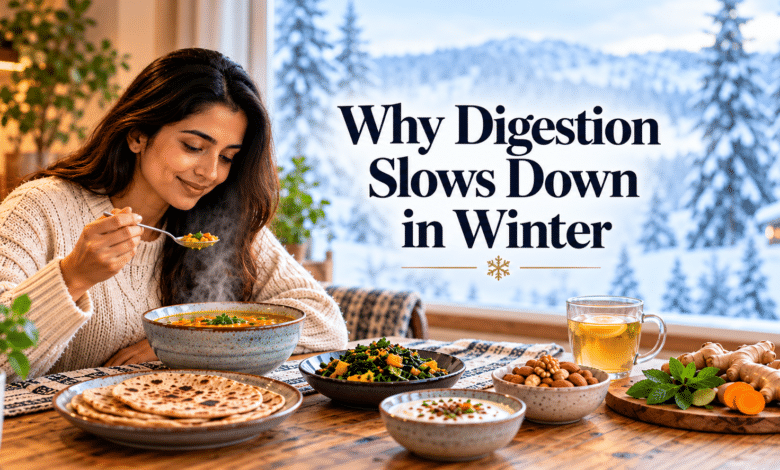
In the winter season, people tend to experience alterations in their eating habits as well as routines. One experiences feeling heavy and bloated after meals during winter season. However, this is not the case where the functioning of the digestive process just stops. Rather, the change in lifestyle factors leads to a slower digestive process.
Understanding why digestion slows down in winter and what to eat can help you stay comfortable and maintain better gut health throughout the season.
Why Does Digestion Feel Slower in winter?
The first one is the fact that people will be physically inactive. During cold seasons, people will be confined indoors, and therefore, their level of physical activities decreases. Physically active lifestyles play an important role in maintaining proper digestion of food and movement of bowels.
Another common reason is the intake of lesser amounts of water. During the summer season, people have an urge to drink water due to thirst. However, in winter, there is no such natural stimulus for drinking water. This may make your stools hard and cause constipation. People eat different types of food items in the winter season.
The preference for fried snacks, pastries, desserts, and calorie-rich food increases. While these foods are enjoyable to eat, but their excessive consumption may make you feel bloated and full especially when you do not eat any amount of fibre. Irregular eating habits during holidays and colder days are another reason.
What Should You Eat for Better Digestion in winter?
Winter season does not need a complicated diet. Start with eating a lot of vegetables that are full of fibre. Carrot, pea, spinach, mustard greens, beetroot, cauliflower and many other vegetables will help you with constipation.
Oats, Dalia, brown rice, and whole wheat roti are good for you when it comes to fibre intake. But be careful, because an excessive amount of fibre in one day can cause some trouble like gases or bloating.
Fruits are also essential. Guava, oranges, apples, pears, papaya, and amla are a good choice for the winter. Also, do not use fruit juices that are packed in packages; eat fresh fruits instead.
Add Gut-Friendly Foods
Fermented foods such as yogurt will be very useful to your balanced diet as long as you get along with them since they contain bacteria that will help you stay healthy. Beans and lentils are also a good source of protein and fibre.
In case you suffer from bloat due to the consumption of beans, you need to soak them and consume them in smaller quantities. Lentil vegetable soup is a good option on winter days since it will not only keep you hydrated but also supply your diet with vegetables.
Stay Hydrated Even When You Are Not Thirsty
You shouldn’t wait until you are extremely thirsty, but should instead keep your fluid levels adequate at all times during the day. To meet your daily fluid needs you can have a variety of fluids such as water, unsweetened tea and soups.
You should steer clear of drinking large amounts of fluids which contain a high proportion of sugar, as well as avoiding fried foods and having dinner late at night.
Final Thoughts
Any problems arising from slow digestion in the winter season could easily be sorted out through certain techniques that could make a huge difference. These include having foods that contain a lot of fibre, for instance, vegetables, fruits, cereals, and also having a balanced diet, drinking enough water, and doing exercise.
The most important thing is believing in oneself and in one’s body. No signs of constipation, stomach pains, weight loss, or presence of blood in one’s stools must be ignored at all.
Read More: Awesome Health Benefits Of Broccoli